
Define the duty
Establish load behavior, autonomy, resilience, emissions, grid and operating requirements.

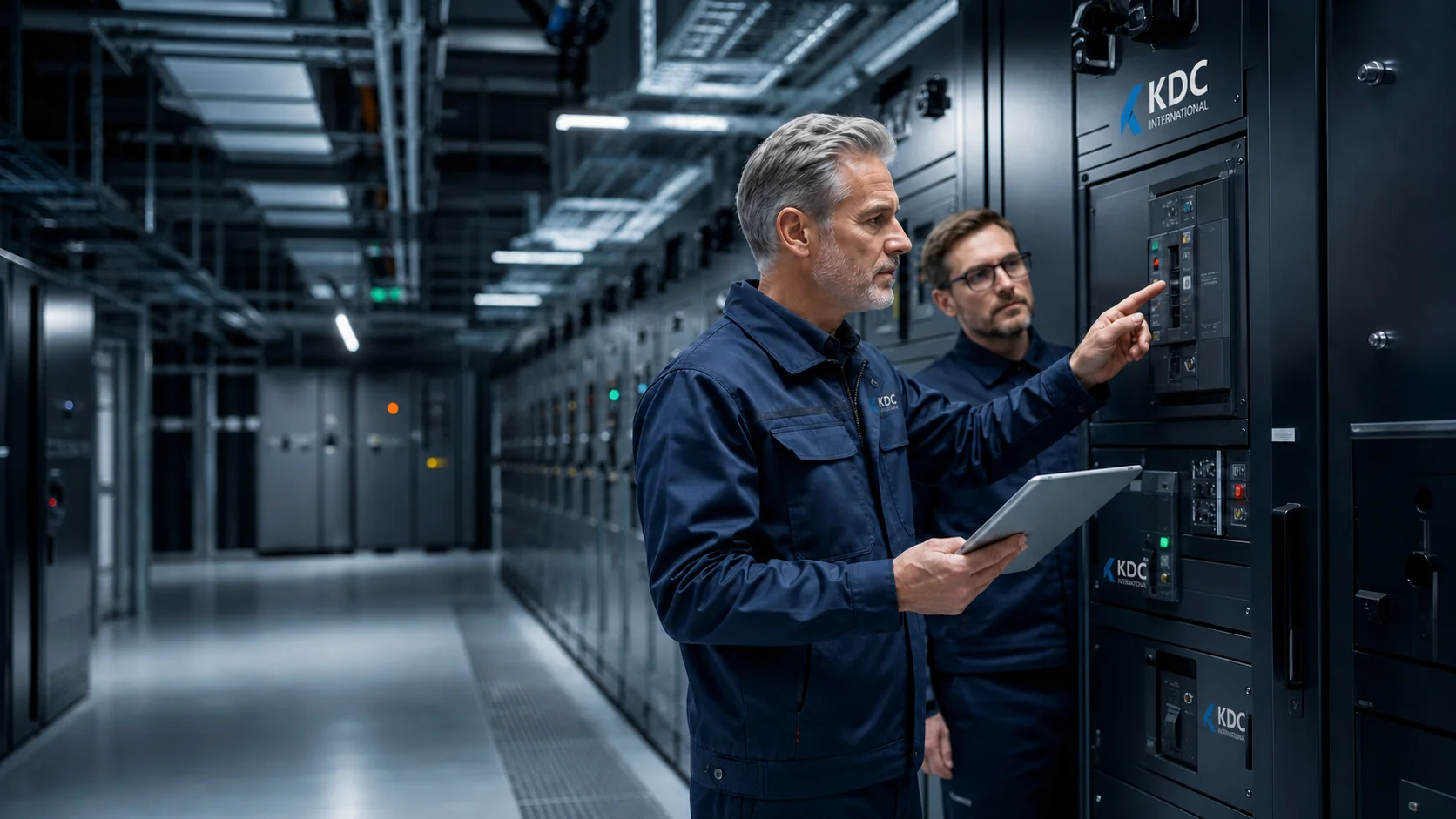
Current power-generation and energy technologies assessed through reliability, grid interaction, fuel and energy availability, emissions, controls, protection, maintainability, safety and project economics.
KDC International · Latest Power Generation TechnologiesCurrent power-generation and energy technologies assessed through reliability, grid interaction, fuel and energy availability, emissions, controls, protection, maintainability, safety and project economics.
Generation, storage, grid and controls are tested together against duty, autonomy, transition, restoration, safety and lifecycle obligations.
Establish load behavior, autonomy, resilience, emissions, grid and operating requirements.
Model utility, generation, storage, fuel and renewable combinations across normal and abnormal states.
Coordinate electrical, civil, mechanical, controls, safety, environmental and utility obligations.
Define studies, factory tests, site tests and integrated operating scenarios.
Practical answers before you share a brief. Open any question to inspect the route.
No. Suitability depends on demand, climate, utility conditions, site constraints, operations, regulation, programme, commercial objectives and the evidence available.
Against defined performance, integration, maturity, maintainability, supply-chain, safety, environmental and lifecycle criteria rather than promotional claims.
A controlled decision record describing the evaluated boundary, alternatives, assumptions, interfaces, recommendation, dependencies and verification route.