

Independent challenge
Test the preferred answer without losing sight of the commercial and operational brief.

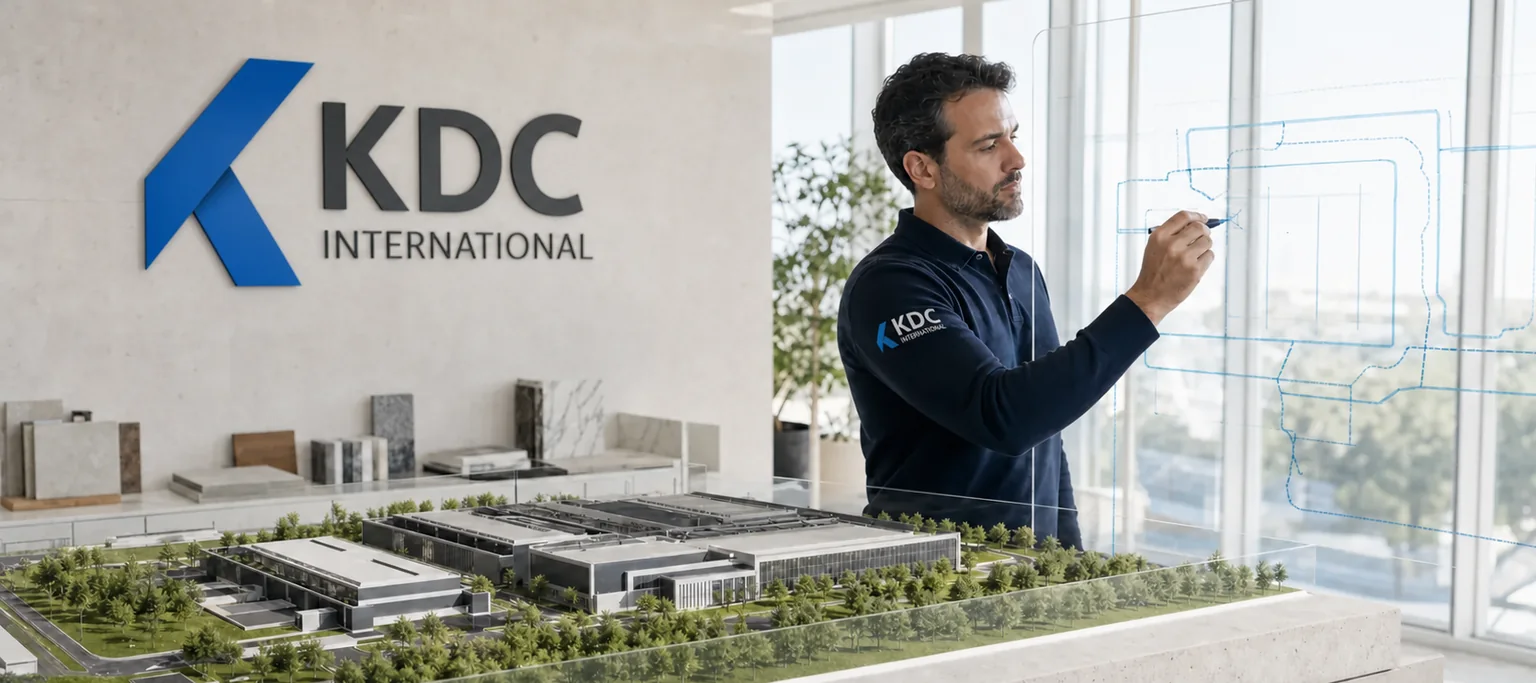
Multidisciplinary engineering shaped specifically around mission-critical infrastructure.
KDC International connects early strategy, multidisciplinary engineering, delivery evidence and operational readiness around the same infrastructure outcome. The purpose is not to add another layer of commentary. It is to keep decisions understandable as they move between disciplines, organizations and project stages.
See how responsibility moves ↓Each field asks a different question. The central evidence spine keeps intent, design, delivery and operation from becoming separate stories.
What must the infrastructure enable, and which assumptions could change the route?
Explore strategy ↗How do systems and interfaces turn the requirement into coordinated intent?
Explore engineering ↗What proves that approved intent survives procurement, installation and closeout?
Explore delivery ↗What evidence demonstrates safe, maintainable and dependable readiness?
Explore operations ↗
Mission-critical work becomes fragile when a specialist answer ignores the systems, people or evidence around it. KDC brings focused technical judgment into a multidisciplinary review route so that interfaces are visible, owners are clear and decisions can be carried forward.
Challenge assumptionsSurface the condition that could invalidate the preferred route.
Connect disciplinesReview the interface as part of a system, not as an isolated handoff.
Preserve evidenceKeep the reasoning and disposition usable for the next accountable team.
Explore the four controls KDC uses to keep a consequential decision understandable as it crosses organizations and project stages.
Begin with the outcome the infrastructure must protect, the conditions that can change it and the person accountable for accepting the decision.
Bring a decision boundary to KDC ↗These principles describe the working standard KDC intends to bring to a project. They are not substitutes for verified project evidence or client-specific acceptance criteria.
Test the preferred answer without losing sight of the commercial and operational brief.
Make each specialist decision answer to the behavior of the complete system.
Attach consequential actions, assumptions and exceptions to accountable owners.
Carry context and evidence forward so that handoffs do not erase the original intent.
KDC’s expertise is organized around connected infrastructure behavior. Choose a field to continue into the relevant technical perspective.
Source, distribution, protection and supported load
Open field ↗02Thermal demand, plant response, controls and rejection
Open field ↗03Information purpose, model interfaces and usable handover
Open field ↗04Failure behavior, recovery paths and operational consequence
Open field ↗05Approved intent, field observation and verified closure
Open field ↗06Test sequence, exception control and readiness evidence
Open field ↗